



search
date/time

Mon, 4:00PM
light rain
16.4°C
WSW 9mph
light rain
16.4°C
WSW 9mph
 | Sunrise | 5:54AM |
| Sunset | 6:13PM |  |

Richard Trinder
Managing Editor
@richardtrinder
P.ublished 31st August 2026
scitech
What Will Roman Do For Us?
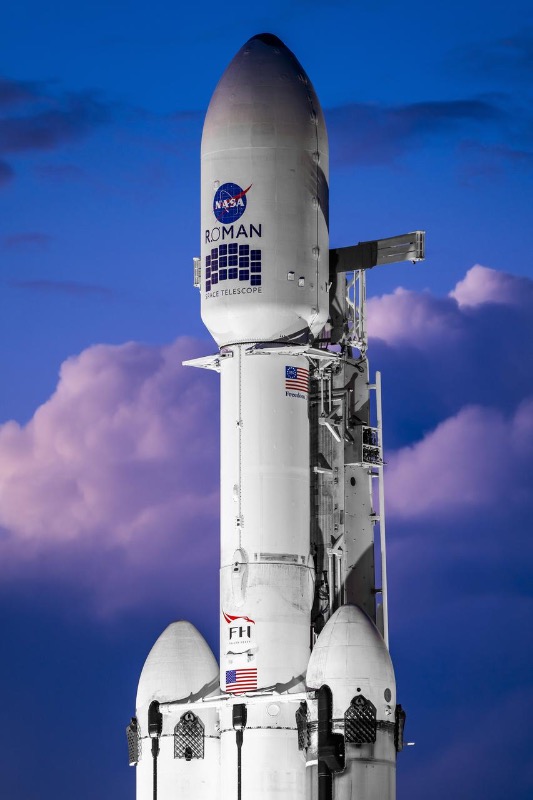
NASA’s Nancy Grace Roman Space Telescope, encapsulated in the SpaceX Falcon Heavy rocket’s fairing. Photo: SpaceX
Its mission: to conduct a survey of the sky in near-infrared light and, in doing so, explore the nature of dark matter and dark energy and find new exoplanets.
Perhaps a better clue about its purpose is seen in its original name, WFIRST (Wide-Field InfraRed Survey Telescope). In 2020 the telescope was renamed to honour NASA's lead astronomer of the wildly successful Hubble telescope: Nancy Grace Roman.
The Roman Telescope differs from earlier platforms such as Hubble and the James Webb in two key respects: it can change where it is looking very quickly, and it has an extraordinarily wide field of view, making it ideal as a survey instrument for looking at a large part of the sky instead of looking ‘deeper’ into a smaller patch.
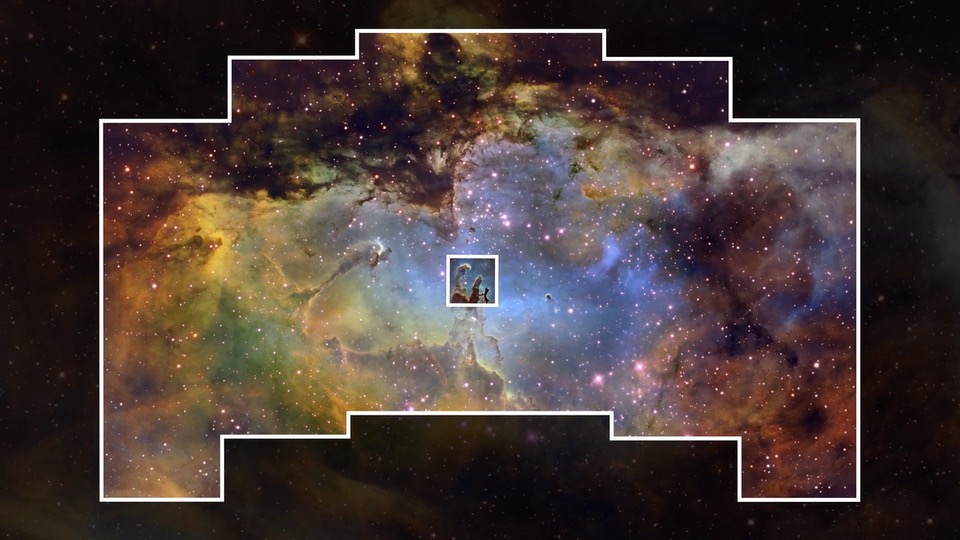
Roman's field of view is 100 greater than Hubble. Credit: L. Hustak (STScI)
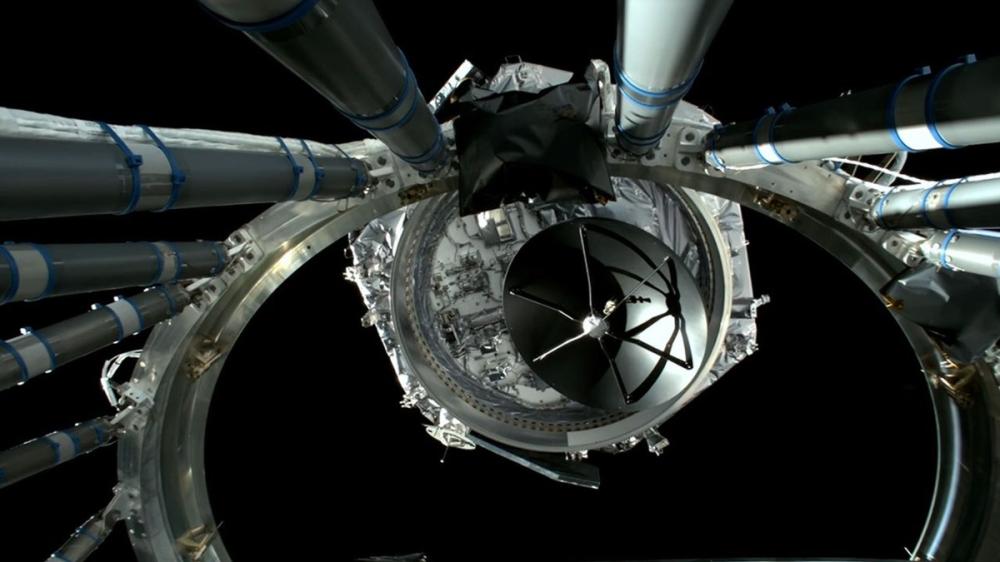
Separation occurs as the Roman telescope payload cleanly detaches from the upper stage of the SpaceX rocket, beginning its solo journey into orbit. Photo from NASA
Dark Forces
Looking even farther afield, Roman will study the mysterious material known as 'dark matter'. By looking at the shapes and the changes of shape of distant galaxies, Roman will be able to infer the presence of something out there that we cannot see directly. Because that 'something' has mass, it has gravity and it is capable of bending light on its very long journey through space. It's an effect known as weak gravitational lensing. By studying tiny changes in the shapes of millions of galaxies, Roman will help astronomers accurately map the distribution of both normal and dark matter across the history of the Universe.
Perhaps even more bizarre than Dark Matter is the concept of Dark Energy. Since the seminal work of astronomer Edwin Hubble in 1929 (yes, the telescope was named after him), we know that the universe is expanding. That in itself is a remarkable fact, but the more recent discovery that the rate of expansion is increasing leads to a fascinating question: what gigantic force could possibly be pushing hard enough to make the expansion of the entire universe faster and faster? This is where the concept of Dark Energy comes from. Needless to say, it is much debated. Roman will study clusters of galaxies and watch how they evolve over time and, hopefully, help illuminate the Dark Energy conundrum.
Coronagraph
Directly looking at exoplanets directly with a telescope is a tricky problem for many, many reasons. One of which is that the accompanying star is billions of times brighter than the planet itself. For this reason, Roman is equipped with a device known as a coronograph.
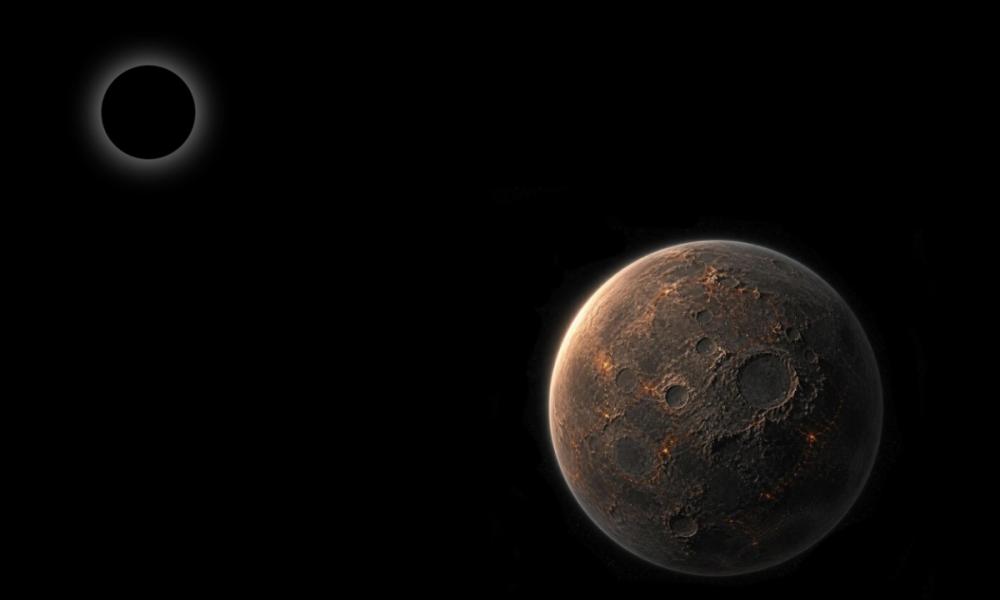
Roman's coronograph is a very new technology and is pioneering the technique. It should allow astronomers to see rocky planets in the so-called Goldilocks zone around stars – ones about the size of Jupiter. The next generation of the device should help us see planets about the size of Earth – and therefore potentially habitable.
European contributions
It's all too easy to see the razzle-dazzle of NASA's presentations with the obligatory kowtowing to President Trump and assume that this is an all-American show. In reality that is far from true: Europe’s contributions to the mission consist of detectors for the Coronagraph Instrument, star trackers, batteries and downlinking data from the spacecraft to a ground station. For this reason, the European Space Agency (ESA) has built a new 35-metre antenna in New Norcia in Australia, next to an existing antenna that is also used by other ESA missions.
What's next?
For the next three months the telescope will be moving into orbit around a position in space called the L2 point. This is where the gravitational pull of the Sun and Earth balances the centripetal force needed for a spacecraft to stay in a steady position. It’s a good spot for clear deep-space viewing because the Earth is providing a shadow from an otherwise very bright Sun.
That gives the engineers at NASA's Goddard Flight Center time to buff up their brand new 288-megapixel eye in the sky.
The world of astronomy and space physics was upended by the findings of the Hubble telescope. The Nancy Grace Roman is almost certain to do the same again. Roman will indeed do some remarkable things for us.
Also by Richard Trinder...
BepiColombo Begins Its Arrival At MercuryNorthern Ballet's Gentleman JackThe Sound Of An Appreciative AudienceAn Interplay With Phoenix DanceSilver & Gold: Long John Silver Restores His Reputation?The shortened address for this article is: newspub.uk/120s1
Search Results