search
date/time
 | Lancashire Times A Voice of the Free Press |
P.ublished 20th January 2026
nature
Six More Rare Hen Harriers Vanish On Or Near Grouse Moors With Another Confirmed Poisoned
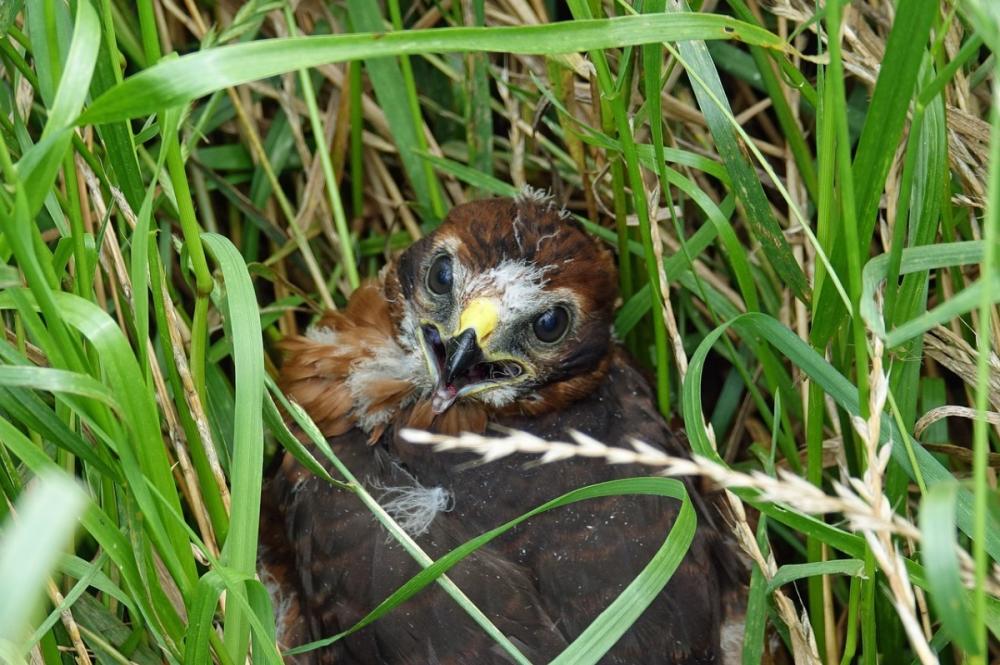
Image by Aart Beijeman from Pixabay
All incidents were quickly reported to the police and National Wildlife Crime Unit’s Hen Harrier Taskforce. Obtaining evidence of Hen Harrier killing and bringing prosecutions is extremely difficult but Police investigations continue.
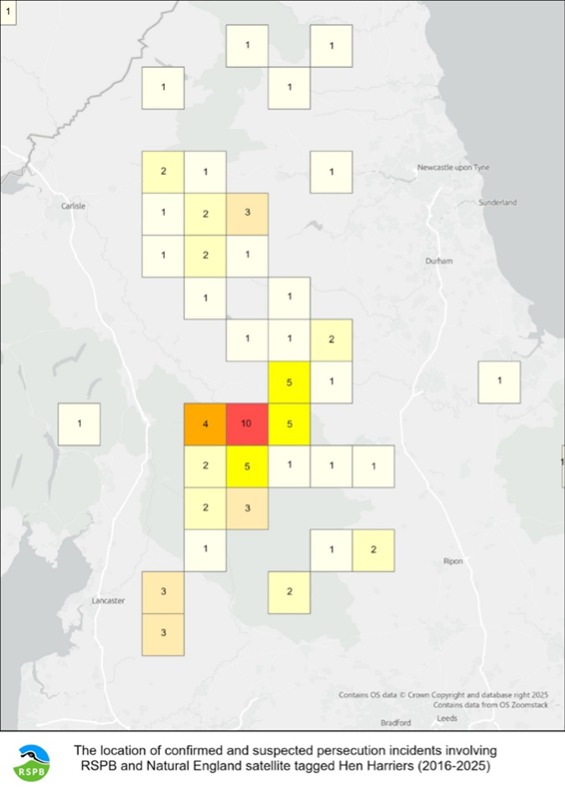
Bird Crime Map
In England, in the last 10 years (2016-2025), 72 satellite tagged Hen Harriers – monitored by the RSPB and Natural England – have suddenly and suspiciously disappeared. With 85% of these vanishing on or near land managed for grouse shooting. These incidents indicate a much wider scale of killing as only a fraction of the total Hen Harrier population is fitted with tags.
All six of the satellite tagged Hen Harriers that suddenly disappeared in 2025 sent their final transmission from hotspots – these being areas with previous bird of prey incidents in northern England, all dominated by grouse moors. Intelligence suggests that these crimes are committed in an attempt to maximise the number of grouse available to be commercially shot for profit during the grouse shooting season.
Tragically, three of the six sat-tagged Hen Harriers which disappeared in 2025 all sent their final transmissions in September - just weeks after fledging the nests and within thirteen days of each other. Recent scientific research has shown that human persecution – the main cause for Hen Harriers vulnerable status – has reduced the lifespan of this rare species, with young birds surviving on average for only four months after leaving the nest.
In addition to the six, one Hen Harrier named Ataksak, was confirmed poisoned after its body was recovered close to a grouse moor in North Yorkshire in early January 2025. Toxicological testing revealed that it had died after being exposed to a lethal pesticide mixture, known as the ‘Nidderdale Cocktail’. Since 2011 this poison has been connected to the deaths of 15 birds of prey and one dog, all in North Yorkshire.
Mark Thomas, RSPB UK head of investigations said: "Although the suspected persecution of six of our satellite tagged Hen Harriers in one year is extremely concerning, these birds are sadly just the latest in a long trend. Since 2010 over one hundred satellite tagged Hen Harriers are suspected to have been illegally killed in the UK, with the majority disappearing on or near land managed for grouse shooting. As satellite tagged Hen Harriers represent a small proportion of the UK’s total Hen Harrier population the true number of Hen Harriers that are being illegally killed across the uplands of the UK is likely to be significantly greater. What we’re seeing is just the tip of the iceberg.”
The RSPB has been continuously calling for the introduction of a robust licensing system for all gamebird shooting in the UK. Introduced in Scotland for grouse shooting in 2024, this proportionate, low-cost measure would only penalise those shooting estates where crimes are being committed and help ensure that this rare and vulnerable species receives the protection it so urgently needs.
James Robinson, RSPB Chief Operating Officer said: “These latest incidents paint a desperate picture for Hen Harrier recovery in England. To prevent this pattern of killing, and give this vulnerable species a realistic hope of recovery, we urgently need licensing of all gamebird shooting to be introduced in England.
“Under this proportionate legislation if a crime is suspected to have taken place, based on a civil burden of proof, the shooting estate can have their licence to shoot revoked - creating a meaningful deterrent against this type of wildlife crime. Scotland took this welcome step in 2024 when it introduced licensing for grouse shooting. We need to follow their lead and give Hen Harrier in England the safety they desperately need.”