



search
date/time

Sat, 10:00AM
scattered clouds
15.9°C
WSW 20mph
scattered clouds
15.9°C
WSW 20mph
 | Sunrise | 5:50AM |
| Sunset | 6:19PM |  |
P.ublished 4th July 2026
travel
Europe’s Most Walkable Cities Revealed
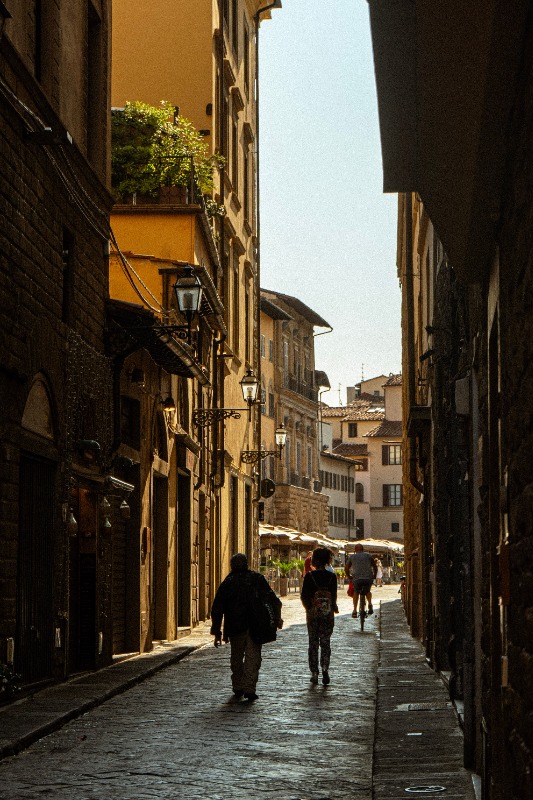
Image WASSIM AHMED on Pexels
For those planning a spontaneous weekend getaway, new research has revealed which popular European travel destinations are the most walkable, with Italian gems like Venice, Florence, and Rome dominating the top five.
The study, conducted by goodtogo, analysed several key criteria that make a city walkable, before combining them to create an ultimate list of the European city breaks that are easiest to navigate on foot.
The assessed factors include the number of parks and plazas in each city, which make for ideal places to have a quick rest. The average elevation of each city, and how close top attractions are to the city centre, which dictate how far visitors will be walking and how hilly a city is. The final criteria, airport public transport connectivity, contributes to whether or not a tourist will need to hire a car to get around.
Taking the top spot on the list is Venice. The iconic Italian city scored highly despite its poor airport connectivity, thanks to its low average elevation and high number of plazas, with the most per capita of any city other than Rome. Venice’s top attractions, including St Mark’s Basilica, the Doge’s Palace and Grand Canal, are also within easy walking distance, with most situated less than half a kilometer from the city centre.
| Overall rank | City |
| 1 | Venice (Italy) |
| 2 | Florence (Italy) |
| 3 | Berlin (Germany) |
| 4 | Rome (Italy) |
| 5 | Stockholm (Sweden) |
| 6 | Milan (Italy) |
| 7 | Athens (Greece) |
| 8 | Lisbon (Portugal) |
| 9 | Paris (France) |
| 10 | Istanbul (Turkey) |
Other popular Italian cities, including Tuscan culture hub Florence, history rich Rome, and the shopping paradise of Milan, all landed in the top 10, thanks to compact city centres and plentiful parks and plazas. Rome in particular boasts a huge amount of third spaces where tourists can take the weight off their feet, with more than 86 plazas per capita, the most of any city.
Outside of Italy, the northern European cities of Berlin (3rd) and Stockholm (6th) will appeal the most to walking travellers. Berlin’s 2,500 parks and green spaces were a driving force behind the high ranking, averaging at 73 parks per 100,000 people. Meanwhile, Stockholm’s low elevation and large number of parks help it appeal to walkers, despite the fact that the distance between main attractions and the city centre is greater than most cities on the list.
At the other end of the scale, Budapest is the least walkable city on the list. A combination of high elevation, distance between attractions, and limited availability of parks and plazas for rest contributed to the Hungarian capital taking the bottom spot.
Europe’s least walkable cities
| Overall rank | City |
| 1 | Budapest (Hungary) |
| 2 | Vienna (Austria) |
| 3 | Madrid (Spain) |
| 4 | Warsaw (Poland) |
| 5 | Barcelona (Spain) |
Spain’s two major cities, Madrid (3rd bottom) and Barcelona (5th bottom), both rank within the bottom five despite having some of the best connected airports of any city on the list. For the capital of Madrid, high elevation and limited park and plaza availability are the main contributors towards the low ranking, whilst for Barcelona, attraction walkability is the main factor. The famous Gaudi landmarks of Casa Batllo, Sagrada Familia, and Park Guell are located far from the city centre, with Park Guell located four kilometers away.
Maria Hughes, travel expert at goodtogo, comments on the findings: “Whether you’re planning to book a last-minute holiday, or you’re looking forward to an upcoming trip, walkability is a hugely important part of a city break.
“If you’re trying to squeeze as much into a short trip as possible, wondering whether you will need to rent a car, or worried about your mobility, you will need to consider how easy it is to get into and around your destination on foot. Practicality isn’t the only factor however, as walking around a city is often the best way to fully immerse yourself into its culture, experience local life, and discover hidden gems you may otherwise have missed.
“To make the most out of a walking city break without putting too much pressure on yourself, I recommend planning ahead to split the city into different regions you can tackle on different days. Instead of spending precious time and energy crossing the city multiple times in your trip, plan to visit a particular area each day and spend your time enjoying everything that location has to offer. You should also pick your accommodation carefully, prioritising a spot that’s central to save time and reduce walking distances.
“Importantly, if you’re a traveller over 50 or have pre-existing medical conditions, give yourself plenty of time to rest and avoid pushing yourself too hard. This is especially important for hotter destinations, where frequent breaks and plenty of water is essential to keep you feeling fit and well. Simple things like supportive trainers or sturdy shoes will also make walking easier, especially in European cities famous for their cobblestones and uneven surfaces.”
The shortened address for this article is: newspub.uk/1200u
Search Results