



search
date/time

Sat, 4:00PM
scattered clouds
11.4°C
NE 7mph
scattered clouds
11.4°C
NE 7mph
 | Sunrise | 6:42AM |
| Sunset | 5:10PM |  |

Andrew Palmer
Group Editor
P.ublished 17th October 2026
arts
Review
Classical Music: Schmitt: Orchestral Works
Schmitt Scales the Heights
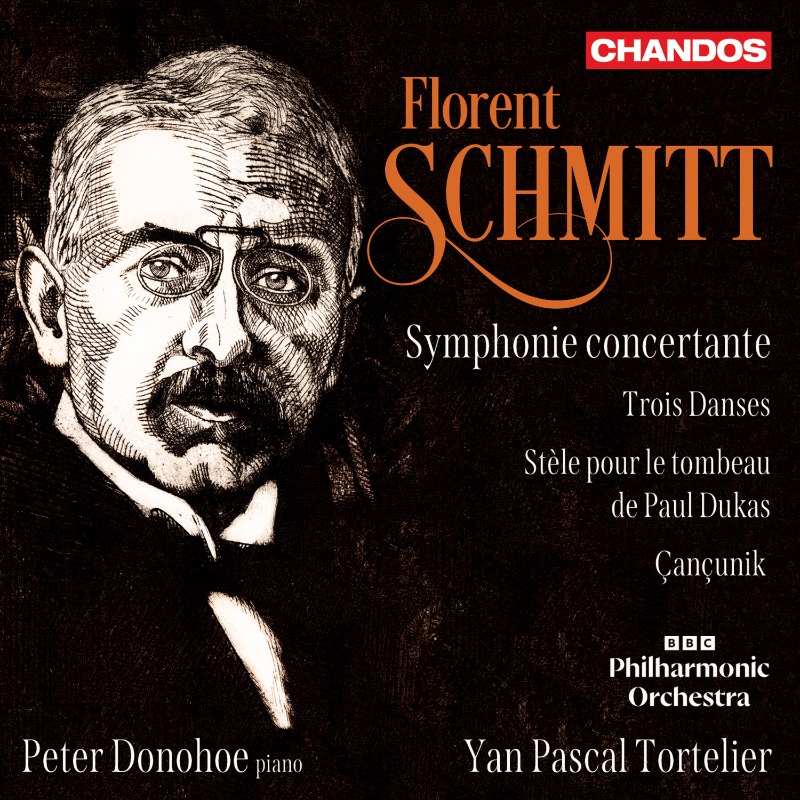
Florent Schmitt: Symphonie concertante, for Orchestra and Piano, Op. 82; Three Dances, for Orchestra, Op. 86; Memorial for the Tomb of Paul Dukas, Op. 87 No. 1; Çançunik, Suite for Orchestra in Two Parts, Op. 79 (première recording)
Peter Donohoe BBC Philharmonic Orchestra
Yan Pascal Tortelier
Chandos CHAN 20366
chandos.net
A word of introduction may help. Schmitt came from Lorraine, from the département of Meurthe-et-Moselle hard by the German frontier, and was born there in 1870. Fauré, Massenet, Dubois and Lavignac all numbered among his professors once he had moved on from local lessons to the Paris Conservatoire as a nineteen-year-old, a formidable roll-call by any standard, and in 1900 he carried off the Prix de Rome. Between the wars his richly post-romantic scores were a fixture of French concert life; after 1945 they slipped quietly from view, and they now surface on disc about as often as a comet. Astonishingly, the Symphonie concertante has been committed to disc just once before.
The piece occupied Schmitt for four years from 1928, much of it written during summers spent among the Pyrenees, and you can almost hear the mountain air in its sheer altitude. Koussevitzky commissioned it for the Boston Symphony Orchestra’s 50th anniversary, and the composer took the fiendish solo part himself. A concerto had been the starting point, yet Schmitt deliberately put the orchestra first in his subtitle, “for orchestra and piano”, and that tells you everything. The keyboard may dazzle, but the argument is symphonic, the soloist a partner rather than a prima donna. That explains why it so often feels as though it ought to be a piano concerto, yet never quite becomes one.
Donohoe dispatches the avalanche of notes and the punishing virtuosity with complete assurance. Orchestra and piano trade chromatic colour at breakneck speed, with cascades of falling figures from solo brass and keyboard alike, and in the closing pages that tiny three-note motif, climbing and tumbling, is hammered home with real conviction.
The slow movement is a valley after the summit, its orchestral fabric woven with real ingenuity and graced by some lovely woodwind playing. From its hushed close, the finale bursts out with mesmerising drive and dazzling skill. Your attention is never permitted to wander, and by the final bars you may well need a stiff drink. I certainly did, though I concede I rarely need much persuading. It is magnificently played all round, and I suspect there was a good deal of enjoyment beneath the furrowed brows.
After all that pent-up momentum, the Trois Danses come as a welcome change of scene. They started out as keyboard pieces before Schmitt dressed them for full orchestra, and they are thoroughly beguiling, with gorgeous woodwind sonorities and a harmonic palette to savour.
The pleasures keep on coming on this outstandingly engineered Chandos album, the label’s renowned sound serving Schmitt’s lavish scoring superbly. The Stèle pour le tombeau de Paul Dukas, from Chaîne brisée, Op. 87, began as a keyboard homage to his friend, appearing in a special 1936 memorial number of La Revue musicale. Two years later Schmitt clothed it in an orchestral dress, and it makes a dignified, deeply felt elegy.
To close comes a world première recording. Çançunik, a two-part suite, took the top prize when Radio-Paris, through its parent body the Compagnie française de radiophonie, staged a composition contest. Its Lied-Nocturne is ravishing, with delicious strings revealing a gentler Schmitt, and the orchestra coaxing out every expressive nuance with real tenderness; the oboe and flute are simply delectable. The Scherzo-Tarantelle is all mischief and sparkle. The disc began with a thunderclap and ends with a smile, at the opposite pole from the Symphonie concertante.
This is a stunning album. If there is any justice, it will be the rope that finally hauls Schmitt out of the crevasse of obscurity.
Also by Andrew Palmer...
Classical Music: Encores for Mr ScottsClassical Music: Marcel DupréClassical Music: Vaughan Williams A Sea SymphonyNorthern Talent Tracker: This Week's AppointmentsEconomy Edges Forward As Business Groups Press Chancellor For Budget ReliefThe shortened address for this article is: newspub.uk/121bk