



search
date/time

Wed, 1:00AM
overcast clouds
9.8°C
SE 6mph
overcast clouds
9.8°C
SE 6mph
 | Sunrise | 6:49AM |
| Sunset | 5:01PM |  |
P.ublished 6th November 2023
business
Brexit Leaves UK Trade Unscathed, Finds New IEA Report
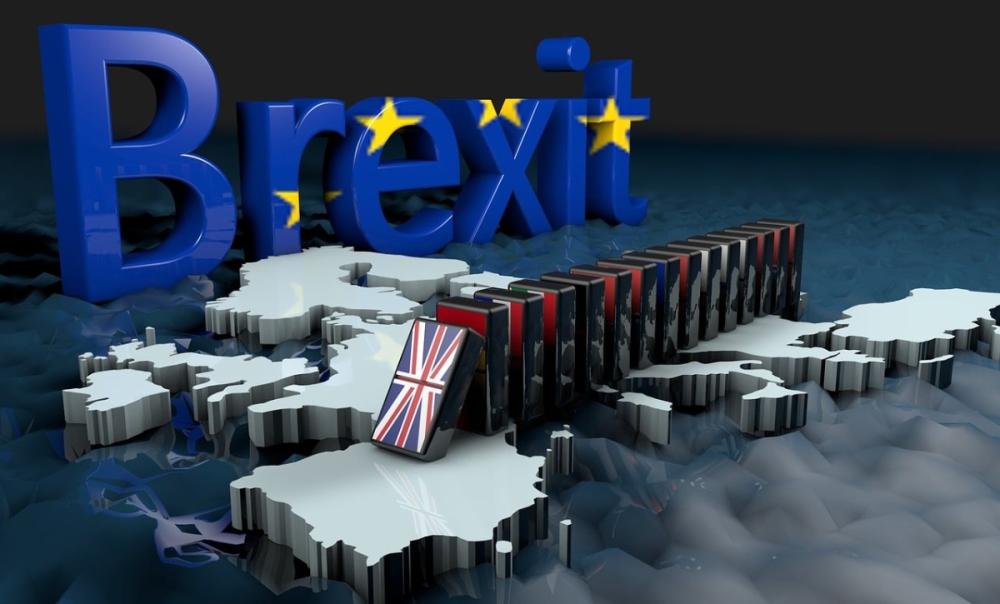
Image by DANIEL DIAZ from Pixabay
Trade continued to grow between 2016 and the conclusion of the Brexit transition in 2020, indicating that Brexit uncertainty did not reduce investment.
UK goods exports rose by 13.5 per cent to EU countries and 14.3 per cent to non-EU countries between 2019 and 2022, before and after Brexit. This indicates no impact of Brexit on goods trade.
UK services exports rose by 14.8 per cent to EU countries and 22.1 per cent to non-EU countries over the same period. Varying demand levels for different products across countries, rather than any consistent Brexit impact, explains this finding.
UK trade patterns compared to other G7 countries have not changed since Brexit.
UK goods exports rose by 13.5 per cent to EU countries and 14.3 per cent to non-EU countries between 2019 and 2022, before and after Brexit. This indicates no impact of Brexit on goods trade.
UK services exports rose by 14.8 per cent to EU countries and 22.1 per cent to non-EU countries over the same period. Varying demand levels for different products across countries, rather than any consistent Brexit impact, explains this finding.
UK trade patterns compared to other G7 countries have not changed since Brexit.
The Office for Budget Responsibility (OBR) asserted that Brexit barriers would result in a 15 per cent drop in trade volumes, contributing to a 4 per cent lower GDP in the long run. This was based on modelling before Britain left the bloc. But now, according to the IEA report, real-world trade data is painting an entirely different picture.
Report author and trade economist Catherine McBride writes: 'While the data is still emerging and longer-term effects are as-yet unknowable, in general, there has been no real disparity between UK trade with EU and non-EU countries.
'Nor has there been a sharp fall in UK–EU trade either at the aggregate or sector level despite it now being seven years since the vote to leave the EU and three years since the UK actually left.
McBride highlights how factors such as the Covid-19 pandemic, rising global energy prices, and new ‘rules of origin’ have influenced particular trading patterns, but there is no evidence of overall adverse effects attributable to Brexit.
She also attributes the resilience of UK trade with the European Union to the tariff-free and quota-free trade deal, the Trade and Cooperation Agreement (TCA), signed in 2020. Dire predictions about Brexit’s impact on trade also fail to account for new opportunities with countries outside of the EU provided by deals with Australia and New Zealand, CPTPP membership, ongoing negotiations with India and the Gulf Cooperation Council, and updated deals with Canada, Mexico, South Korea, Switzerland, and Turkey.
McBride concludes that the impact of Brexit on trade will ultimately be determined by how the UK uses newfound regulatory and trade policy powers.
In a speech today at International Trade Week’s launch event, “Boost Your Global Success” in London, The Rt Hon Kemi Badenoch MP, the Secretary of State for Business and Trade, is expected to say:
"This is why I just don’t agree with the narrative that Brexit has 'severely damaged' our economy.
"Every major country, especially in Europe, has faced significant economic challenges over the last few years.
"We should stop taking ourselves down, and instead talk ourselves up.
"As today’s excellent IEA paper, written by the economist Catherine McBride, shows - contrary to some media reports and many pre-Brexit establishment voices, the data says Brexit has not had a major impact on UK–EU trade. UK trade with EU countries has broadly moved in line with UK trade with non-EU countries.
"As the ONS will also confirm, our goods exports are back to pre-Brexit and pre-Covid levels. And we remain the second largest service exporter in the G7.
"Britain is growing faster than Germany and France. Our tech sector is thriving, with more unicorns than France and Germany combined. And our manufacturing sector has overtaken France to become the eighth biggest in the world.
"This is what I want to talk about.
"This is also why, when talking about commerce and industry, we have to deploy critical thinking and apply first principles of free and open trade.
"And I think this is the essence of what International Trade Week should be about.
"Celebrating our success."
"This is why I just don’t agree with the narrative that Brexit has 'severely damaged' our economy.
"Every major country, especially in Europe, has faced significant economic challenges over the last few years.
"We should stop taking ourselves down, and instead talk ourselves up.
"As today’s excellent IEA paper, written by the economist Catherine McBride, shows - contrary to some media reports and many pre-Brexit establishment voices, the data says Brexit has not had a major impact on UK–EU trade. UK trade with EU countries has broadly moved in line with UK trade with non-EU countries.
"As the ONS will also confirm, our goods exports are back to pre-Brexit and pre-Covid levels. And we remain the second largest service exporter in the G7.
"Britain is growing faster than Germany and France. Our tech sector is thriving, with more unicorns than France and Germany combined. And our manufacturing sector has overtaken France to become the eighth biggest in the world.
"This is what I want to talk about.
"This is also why, when talking about commerce and industry, we have to deploy critical thinking and apply first principles of free and open trade.
"And I think this is the essence of what International Trade Week should be about.
"Celebrating our success."
Report author and trade economist Catherine McBride said:
“A false narrative that Brexit has harmed UK trade is now firmly entrenched in the British public psyche, but this just isn’t true. The trade data doesn’t show this. Just as false is the idea that trade friction has reduced UK-EU trade.
“The vast majority of UK and EU trade is conducted by multinational companies who manage to sell goods all over the world without baulking at the paperwork, but the UK media somehow assumes these companies are too stupid to cope with some additional EU paperwork.”
“A false narrative that Brexit has harmed UK trade is now firmly entrenched in the British public psyche, but this just isn’t true. The trade data doesn’t show this. Just as false is the idea that trade friction has reduced UK-EU trade.
“The vast majority of UK and EU trade is conducted by multinational companies who manage to sell goods all over the world without baulking at the paperwork, but the UK media somehow assumes these companies are too stupid to cope with some additional EU paperwork.”
The shortened address for this article is: newspub.uk/11mzd