



search
date/time

Tue, 10:00AM
clear sky
20.9°C
W 1mph
clear sky
20.9°C
W 1mph
 | Sunrise | 3:51AM |
| Sunset | 8:24PM |  |
P.ublished 15th December 2023
business
Bank Of England Not Necessary, Says Landmark IEA ‘Free Banking’ Book
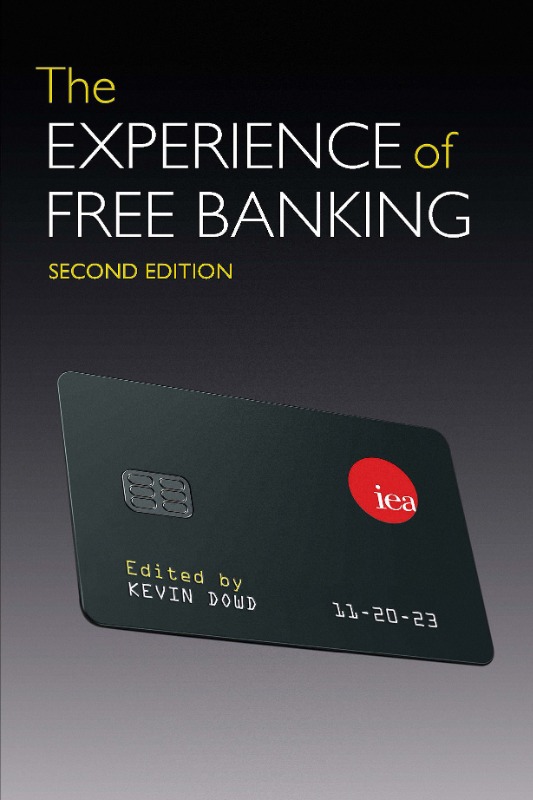
The Experience of Free Banking outlines a monetary system where private banks issue competing banknotes, usually anchored to a commodity like gold or silver, replacing the central bank's role. This approach empowers the public to choose or discard a bank's currency, promoting a competitive and stable banking environment.
“The historical record shows that free banking is not prone to inflation, does not produce banking instability and does not produce a banking monopoly,” says book editor Kevin Dowd, Professor of Finance and Economics at Durham University Business School. “These are big pluses. Plus if it worked in the past, then there is every reason to think it would work again in the future.”
The book comes as Argentina’s new President Javier Milei has pledged to abolish the country’s central bank following triple-digit inflation and decades of monetary mismanagement.
Between 1716 and 1845, Scottish banks issued competing banknotes secured to fixed quantities of precious metals like gold or silver with few government restrictions on the sector. Scotland’s free banking period delivered stability, low inflation, and economic growth.
Adam Smith, in The Wealth of Nations, highlighted the significant role played by Scottish banking in the country’s economic development. Scotland’s per capita income increased from half of England’s in 1750 to nearly equal by 1845.
Scottish banks over this period failed at half the rate of England’s, demonstrating the system's stability. It also delivered innovations such as extending bank branches, interest payments on deposits and an early form of overdraft.
Scotland’s successful period under free banking contrasts with the record of the Bank of England, which has played a central role in multiple economic crises, episodes of financial instability and inflation. Economist Kurt Schuler, a chapter author, writes “that London was the storm centre of so many eighteenth- and nineteenth-century panics suggests that the Bank of England’s effect on the world financial system may have been detrimental.”
Kevin Dowd, book editor and Professor of Economics at Durham University Business School said:
“The experience of free banking shows that the root problem lies not with the markets, but with government interference in financial markets, starting first and foremost with the government setting up a pet bank to grant it loans it could not otherwise obtain. This original sin has spawned no end of needless problems that plague us to this day.
“Free banking achieved long-term price stability because it was based on a commodity standard that provided a discipline against the over-issue of money that is the proximate cause of inflation. Its record in this regard is vastly superior to that of the central banking systems. Free banks were also highly capitalised and much more stable than modern banks, and financial crises under free banking were notable for their rarity.”
“The experience of free banking shows that the root problem lies not with the markets, but with government interference in financial markets, starting first and foremost with the government setting up a pet bank to grant it loans it could not otherwise obtain. This original sin has spawned no end of needless problems that plague us to this day.
“Free banking achieved long-term price stability because it was based on a commodity standard that provided a discipline against the over-issue of money that is the proximate cause of inflation. Its record in this regard is vastly superior to that of the central banking systems. Free banks were also highly capitalised and much more stable than modern banks, and financial crises under free banking were notable for their rarity.”
Daniel Hannan, Lord Hannan of Kingsclere said:
"In our system, officials make the decisions and politicians get the blame. The anger that people feel about the cost of living crisis should properly be directed at the Bank of England, whose analysis was consistently wrong, and whose unwillingness to turn off the monetary taps has had calamitous consequences.
"What should we do about it? Are we talking reform or abolition? Here is a thoughtful and valuable take on the whole question."
"In our system, officials make the decisions and politicians get the blame. The anger that people feel about the cost of living crisis should properly be directed at the Bank of England, whose analysis was consistently wrong, and whose unwillingness to turn off the monetary taps has had calamitous consequences.
"What should we do about it? Are we talking reform or abolition? Here is a thoughtful and valuable take on the whole question."
Kurt Schuler, author of three chapters in the book and senior fellow in financial history at the Center for Financial Stability (New York), said:
"Much of what economists tell each other and the public about the nature and necessity of central banking is made up, without historical grounding. This book, in an enlarged second edition, explains the extensive but still generally neglected experience of competitive provision of currency.
"Far from being the story of a past that will never return, The Experience of Free Banking is highly relevant to today's debates about privately provided cryptocurrencies, central bank digital currencies, and financial regulation."
"Much of what economists tell each other and the public about the nature and necessity of central banking is made up, without historical grounding. This book, in an enlarged second edition, explains the extensive but still generally neglected experience of competitive provision of currency.
"Far from being the story of a past that will never return, The Experience of Free Banking is highly relevant to today's debates about privately provided cryptocurrencies, central bank digital currencies, and financial regulation."