



search
date/time

Sun, 1:00AM
few clouds
9.4°C
WNW 10mph
few clouds
9.4°C
WNW 10mph
 | Sunrise | 6:29AM |
| Sunset | 5:26PM |  |
P.ublished 18th July 2026
travel
Baggage Tech Takes Centre Stage As Europe Braces For New Cabin Bag Rules
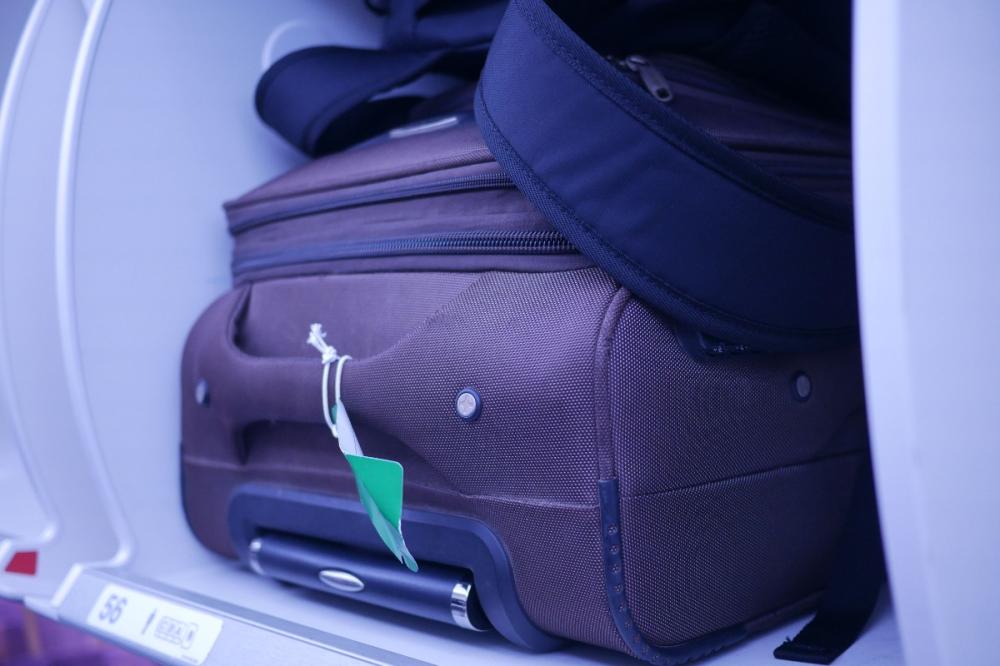
Photo: owfiqu barbhuiya on Pexels
While Brussels' new cabin bag rules have dominated headlines this month, a less-noticed report published by SITA offers a sobering reminder of how much can still go wrong once luggage — cabin or checked — enters the system.
The air transport technology company's 2026 Baggage IT Insights Report, its 20th annual edition, found that mishandled baggage rates declined by 23% in 2025, the strongest improvement recorded outside the Covid-19 recovery period, even as global passenger numbers climbed to a record five billion. Roughly 24 million bags were mishandled during the year, with each incident costing airlines an average of $260 — a sharp revision of the industry's long-cited $150 benchmark. With the industry's average net profit standing at just $8 per passenger, a single mishandled bag can wipe out the profit generated from more than 30 passengers, while five such incidents can eliminate the profit from an entire flight.
It is a useful piece of context for the EU's cabin bag reforms. If, as SITA's Sergio Colella suggested, more passengers opt to carry rather than check their luggage once a bag is bundled into the fare, the operational stakes described in the report — transfers, capacity, recovery — shift from the hold to the cabin, but the underlying lesson is the same: what looks like a straightforward change in the rules ripples through systems most passengers never see.
The report's regional breakdown adds a European dimension worth noting. Europe has the highest average cost per mishandled bag at $295, along with a mishandling rate of 10.5 bags per 1,000 passengers, attributed to the region's complex transfer networks and capacity constraints — precisely the kind of pressure points Colella flagged in relation to cabin baggage. By contrast, Asia-Pacific has the lowest mishandling rate of 3.41 bags per 1,000 passengers and the lowest average cost per bag at $210, aided by newer airport infrastructure and earlier adoption of baggage technologies.
SITA credits the overall improvement not to any single fix but to better-connected systems. The report attributes the improvement to better connectivity across baggage operations, with real-time data sharing, AI-powered baggage routing, biometric bag drop and connected passenger services helping airlines and airports identify and resolve disruptions more quickly. Nicole Hogg, SITA's Portfolio Director for Baggage, put it plainly: "Baggage is shifting from a logistical problem to a digital service. Passengers expect to know where their bag is at every moment, and they're increasingly willing to help us track it."
Some of the gains are striking. Apple's Find My integration with SITA WorldTracer cut permanently lost luggage by 90% in its first year and shortened delayed-bag recovery by 26%, while Thai Airways, using SITA's Auto Reflight, compressed a three-minute task to a single second per bag across nine airports.
Yet the report is careful not to overstate the industry's progress. Delayed bags account for around 70% of the total cost, most of it operational, in recovery, rerouting and delivery, while for lost or damaged bags, up to 70% of the cost is compensation. And transfers remain the core mishandling driver, accounting for 39% of cases in 2025 — a figure that speaks directly to Colella's warning about the knock-on effects of changing what passengers bring on board.
SITA chief executive David Lavorel frames the challenge as one of intelligence rather than infrastructure. "Airports are operating closer to their physical limits every year, and the answer isn't always more concrete. Data, AI and predictive operations let us get more out of the airport we already have, at check-in, security, the gate, on the apron and in baggage halls," he said.
Taken together, the report and Colella's comments make the same case from two angles: as Europe's airlines adjust to a more transparent fare structure, the industry's ability to absorb that change smoothly will depend less on the rules themselves than on whether the data behind the scenes keeps pace. For passengers, that distinction may be invisible — right up until it isn't, somewhere at the gate.
The shortened address for this article is: newspub.uk/12081