



search
date/time

Sat, 4:00AM
light rain
16.4°C
SW 20mph
light rain
16.4°C
SW 20mph
 | Sunrise | 5:50AM |
| Sunset | 6:19PM |  |

Andrew Liddle
Guest Writer
P.ublished 9th July 2026
arts
A Voice To Make The Heart Ache And Rejoice
Andrew Liddle pays tribute to Bonnie Tyler who died today
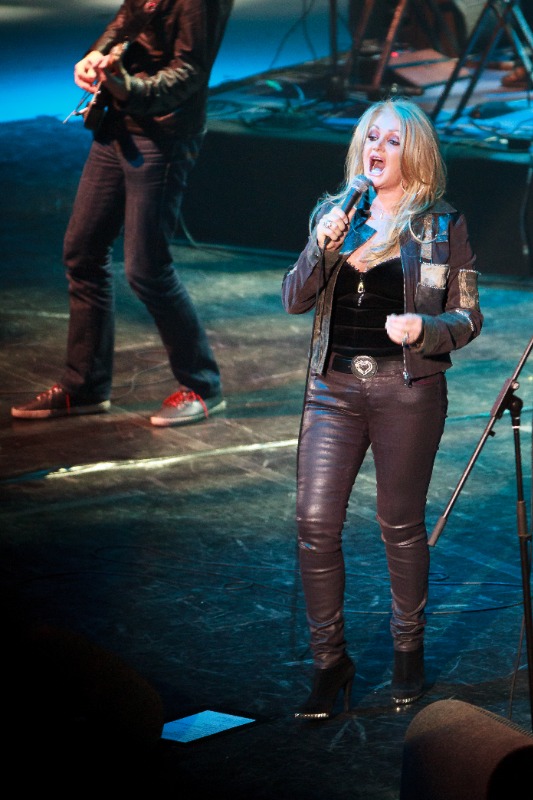
Bonnie Tyler,
Photo by Daniel Robert Dinu from Gigxels
As someone who has spent a lifetime listening for that rare, singular quality in a voice—one that doesn’t just carry a melody but vibrates with the fullness of lived experience—Bonnie Tyler was a revelation. While my own compass has long been set by the golden age of the first half of the 20th century, I have always been a connoisseur of the earthy female voice, finding the polite, bloodless quaverings of many pop singers to be distinctly unmoving.
Bonnie Tyler belonged to that visceral, soul-baring lineage I so deeply admire. I have found transcendence not just in the pathos, but in the triumphant resilience of Bessie Smith, the haunting passion of Edith Piaf, the rusty sonority of Kay Starr, and, above all, the soulful depth of the unparalleled Portuguese fadista Amália Rodrigues and the magnificent mellifluence of Renata Scotto. Like these legends, who brought profound, dramatic intensity to every note, Bonnie Tyler possessed an instrument that felt lived-in and weathered by experience—full of sincerity, unbridled passion, and an irrepressible joy in the act of performance.
Born Gaynor Hopkins in Skewen, Wales, she rose from local talent shows to international superstardom, but it was an accidental evolution that cemented her place in history. Following vocal cord surgery in the late 1970s, she emerged with a distinctive, gravelly rasp—a texture that mirrored the raw emotional weight of Belle Baker or the rugged, authentic power of jazz greats like Bessie Smith, Una Mae Carlisle, and Ella Mae Morse. That voice was, in my opinion, one of only two from that period capable of transforming a standard pop song into something celebratory and transcendent. (The other, for those interested, was Toni Willé, the lead singer of the Dutch pop group, Pussycat, whose immortal "Mississippi" once topped all the charts across the English-speaking world.)
Few artists captured the sheer, bombastic vulnerability of the 1980s quite like Bonnie Tyler. Total Eclipse of the Heart is more a cultural landmark than a song; whether belted out in a football stadium or echoing from a barroom jukebox, its reach remains undiminished. From the soaring defiance of Holding Out for a Hero to the soulful longing of It’s a Heartache, Tyler possessed the rare ability to move an audience with an intensity of an operatic aria, and a reminder of the cathartic, life-affirming power of music.
Beyond her vocal gift, she was a testament to the resilience of the working artist, performing with tireless dedication for decades. From her Grammy nominations to her 2013 Eurovision appearance and her recent autobiography, Straight From the Heart, she remained a vital, active presence in culture and a proud Welsh icon.
Her passing in Portugal, following a period of illness faced with the same tenacity she brought to her performances, leaves a void. She is survived by her husband of over 50 years, Robert Sullivan, and a legacy that ensures her voice will continue to echo whenever someone needs to sing their heart out.
Thank you, Bonnie Tyler, for the power and passion of your wonderfully expressive voice. In my view, yours was a sound possessed of true 'duende' - that elusive, enigmatic, enchanting spirit described by Garcia Lorca as a force that bypasses the mind to strike directly at the soul. It was a voice that embraced the full spectrum of life. It would have graced the deepest blues or the most haunting Fado, celebrating the paradoxical pain and joy of love and the transformative, triumphant power of the human voice when singing from the heart.
Also by Andrew Liddle...
The Trial Of Romeo Oscar - Stephen Joseph Theatre, ScarboroughObituary: Sir Billy Boston - The Wigan WarriorEd O’Donnell, The Doyen Of Leeds JazzFrom Alpine Roots To Global Stages: How Oesch’s Die Dritten Keep Tradition AliveWinterreise In The Ryedale Heatwave: Icy Solitude At The Height Of SummerThe shortened address for this article is: newspub.uk/12049
Search Results