



search
date/time

Sun, 10:00AM
broken clouds
9.8°C
S 9mph
broken clouds
9.8°C
S 9mph
 | Sunrise | 6:17AM |
| Sunset | 5:41PM |  |

Andrew Palmer
Group Editor
P.ublished 8th July 2026
business
A Ghost Speaks, And A Cathedral Listens
Incidents in the Life of An Anglican Slave, Ripon Cathedral
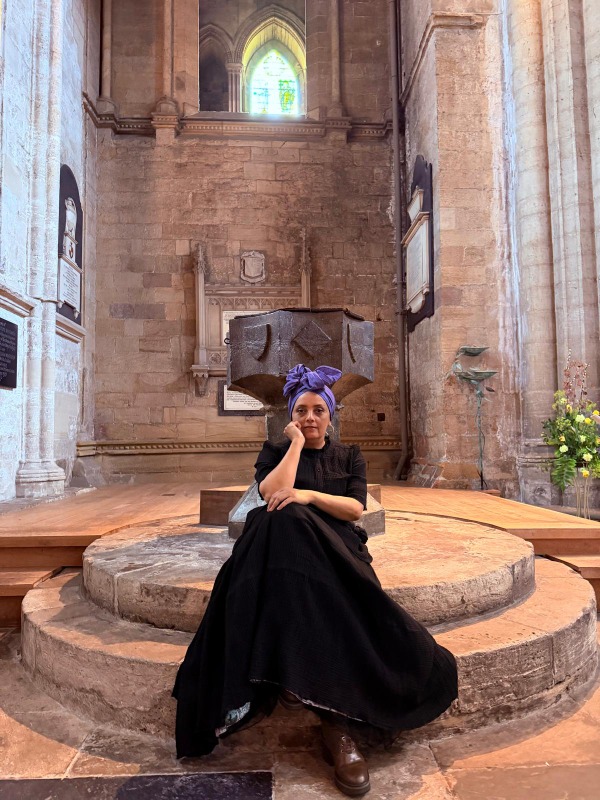
Desirée Baptiste
The letter, held in the Church of England's archives at Lambeth Palace Library, was addressed — almost certainly — to William Wake, Archbishop of Canterbury. Its writer was of mixed heritage, enslaved by their brother, raised within the Anglican faith, and afforded no time to write except on Sundays. They addressed their plea not merely to a bishop but to the most senior cleric in the Church of England and, in the same breath, to the King. The courage of that act is almost impossible to overstate; what Baptiste discovered, when she examined the document in person, was that its ambition had been hiding in plain sight for three centuries in a single misfiled syllable — the "arch" before "Bishop of London" that redirected the letter's true destination and transformed her understanding of its author entirely. It was that moment of archival revelation that inspired the play, and the meticulousness of the research behind it is evident in every scene.
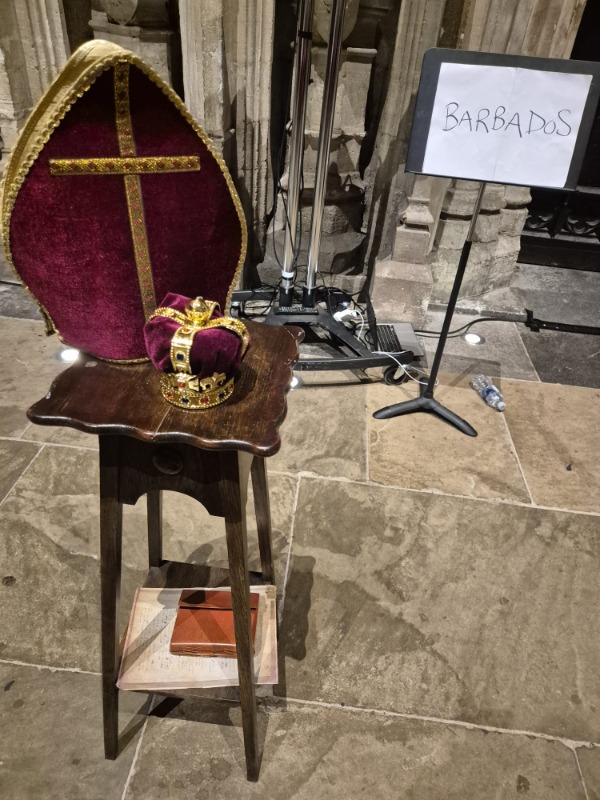
The piece announced itself with a negro spiritual, a single voice carrying across the cathedral's stone interior and setting the scene with an economy that more elaborate stagecraft could not have matched. The rhyming couplets and poetic language that followed were delivered with skill and a rhythmical energy that gave the narrative real momentum — though it is fair to note that the pace occasionally ran ahead of some audience members, particularly in the earlier passages where the historical density is at its highest. A Barbados slave chant midway through shifted the register beautifully, deepening the ambience at precisely the right moment.
What Baptiste has achieved, spectacularly, is the fusion of a real story's many strands into a single coherent arc — taking two distinct threads of history and weaving around them a work of genuinely accomplished creative writing. The comedy, when it arrives, earns its place: contemporary references to personal pronouns, Netflix, and a wry nod to The Handmaid's Tale sit alongside a moment of perfectly timed misdirection in which Baptiste conjures the swinging sixties – only to remind the audience, with a deadpan pause, that she means the 1760s. It is the kind of joke that makes a serious point about how easily we locate injustice safely in the past, and the audience's laughter had an edge of recognition to it. This is a parable for today's world as much as a work of historical reclamation, and Baptiste never allows the audience to forget it.
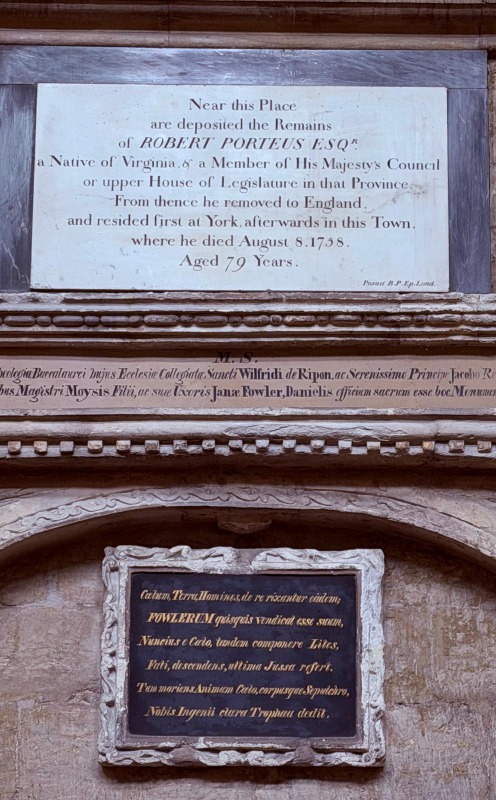
A memorial plaque in Ripon Cathedral
The post-show Q&A was as illuminating as the performance itself. An audience that had arrived curious left captivated, and the conversations that emerged – around reparation, around education, around how a story of this scale and significance might reach the widest possible audience – carried an energy that suggested many in the room were thinking the same thought: that this piece deserves a life beyond the festival circuit, whether as a television drama, a radio programme, or a podcast series that could be shown in schools. It is an entirely reasonable ambition.
Baptiste, asked whether performing in a sacred space changes the experience compared with the Edinburgh Fringe, had little hesitation: the cathedral, she said, is the perfect home for this work. Ripon has done it proud. One hopes Chester will not be the only other cathedral to have had the courage and the vision to host it, and that the wider Church of England — whose own archives yielded this extraordinary document — will eventually find its way to the same conclusion.
Also by Andrew Palmer...
Classical Music: Ralph Vaughan Williams From Ursula, With LoveClassical Music: Requiem Da Camera, For St Cecilia & In Terra Pax Classical Music: Franck Quintet Enescu OctetClassical Music: Granville Bantock Orchestral WorksIlkley Literature Festival Opens With A Strong Yorkshire AccentThe shortened address for this article is: newspub.uk/1203d
More in this series...
A Stunning Conclusion: Romeo and Juliet Brings The Curtain Down On Ripon Theatre Festival 2026No Town Of Culture Title, But Ripon Already Knows What It's WorthVoice In The DarkBreathless In Ripon: Stephen Smith's One Man Poe Is Gothic Horror At Its Finest.Riot Women, Meet Your Match: Batty! Brings Menopausal Rebellion To RiponSeeing Red — And Loving Every MinuteLepers, Book Of Job And A Festival That Isn't Afraid To Show Its WorkingsCurtain Rises On Milestone Fifth Ripon Theatre Festival With Two Powerful New PlaysDiscovering The Slave's Ghost Letter That Became A Cathedral PlayAll Singing, All Dancing, All AmberRipon Theatre Festival Boosts Youth Engagement At RTF26